Wednesday, December 30, 2009

Christmas in Durban


So happy to see water and the beach.

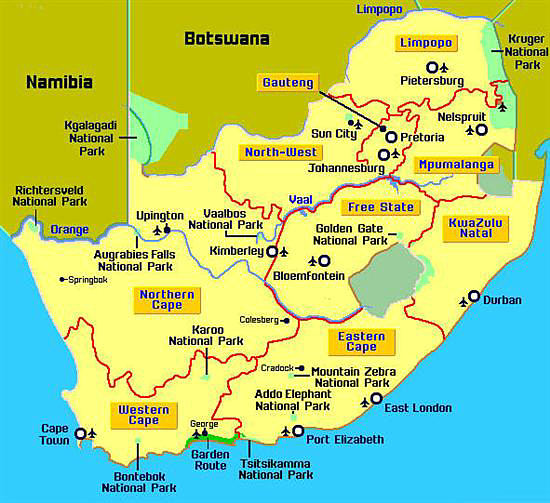
I spent Christmas weekend at the beach in Durban, South Africa.  We drove to Joburg and then flew the 1 hr from Joburg to Durban.  Flying outside the United States is so much less painful!  You can bring liquids, leave your shoes on, they deboard the planes through the front and the back doors, etc!  Our first day in Durban was cloudy and misty so we toured the city.  Being that it was Christmas, none of the museums were open.  But we did manage to find a statue of Ghandi.....

Then it was off to the beach.  There were several people who had created amazing sand sculptures.  They said on average they spend 6 hours or more making the sculptures.  They leave them over night but they are often distroyed by the next day and need to be recreated.  Interesting way to make a living.


We got really into the jump shots....  

After several hours of exploring we were ready to head back to our hotel in a suburb of Durban.  We took two adventurous combi rides.  Combis are the public transportation system here; they are minivans that travel around the city on specified routes.  The first one was in a supped up combi complete with even a TV blaring a cartoon.  The second was not as nice and quite cramped but got us where we needed to go.

The second combi ride was more cramped than the first...

The following day was gorgeous, a perfect beach day. We went to the beach in Umhlanga, the suburb where we were staying.  It was a totally different beach experience from the beach in Durban.  The after effects of apartheid are still very present.  On the beach in Durban there were very few white people, no umbrellas to rent, less shops, more garbage and no pretty pier.  Umhlanga was the opposite.  It was a stark reminder that only 19 years is not enough time to overcome years of oppression.

Gelane and me on the pier on the beach at Umlhanga


Right on the edge

The next day we made our way back to Joburg.  Since we arrived in the morning we figured we would make a trip to the Apartheid Museum.

It is an incredibly well done museum that should be part of everyone's visit to South Africa!  No pictures are allowed to be taken inside, so you will just have to take my word for it.  The museum starts with each person being handed a ticket that says either "White" or "Non-White" and then you have to enter through the entrance that corresponds to what is written on your card.  As you make your way through the entrance you see replicas of the passcards which everyone was forced to carry.  While both whites and blacks were supposed to carry the cards, only blacks were ever sent to jail for not carrying them (even if they were only going to the corner store for a minute).  The museum led me through a history of South Africa, then the creation and abolition of apartheid.  There was also a special exhibit on Nelson Mandela.  So much to read and see that I spent almost 4 hours in the museum and easily could have spent more.  It made me appreciate just how far South Africa has come in the 19 years since the end of apartheid, even though there is still a LONG way to go.

"To be free is not merely to cast of one's chains,
but to live in a way that respects and enhances the freedom of others" - Nelson Mandela

This quote is on the entry wall of the museum.  A statement that was truly exemplified by Nelson Mandela who easily could have tried to retaliate against those who had imprisoned him for much of his life; but instead he worked towards creating a country where everyone was equal.
It gives us all something to strive for as we approach the new year... 

Sunday, December 20, 2009

UNFAIR

Earlier this week I was asked to consult on a patient on the pediatric inpatient ward in Serowe.  I was told that the patient was a 14 year old with heart failure.  As I walked to the ward with my fellow PAC doctor (Steph) we wondered allowed what we would be able to offer the patient given our limited experience managing heart failure (after all it is not a common problem in children and not one that general pediatricians routinely manage.)  When I started looking through the chart I began to think that the story sounded all too familiar.  The patient (we'll call him Tefo) had just been diagnosed with HIV at the late age of 14, he was an orphan, and had just been started on antiretrovirals (ARVs) despite a high CD4 count.  Steph wondered why he had been started on treatment. (In Botswana, when a patient has a CD4 count >250 there has to be another reason for starting ARVs - like an opportunistic infection or failure to grow, etc.)  And then all of the pieces fell together, Tefo was the same child I had seen just 2 months earlier with his aunt in one of the local clinics (see last blog about disclosure).  I had started him on ARVs because at 14 he was the height and weight of an eight year old.  As soon as I saw him I knew it was him.  He had been admitted to the hospital for chest pains and shortness of breath about 1 week earlier and it was discovered that he had an aortic aneurysm and severe aortic regurgitation.  By the time we saw him he was stable and was actually walking around the ward.   However, his heart sounded nothing like it had just 2 mths earlier, which means that his heart problems were acute.  It is possible that the aneurysm has been there for some time, but has suddenly grown larger causing him to be symptomatic.  We are still unsure what caused an aneurysm in the first place, could it be congenital?  Could he have Marfan's syndrome?  What would Marfan's Syndrome look like in a child who is so stunted (given that people with Marfan's are usually very tall)?  We don't have genetic testing available here and the bottom line is that he needs to go to South Africa for heart surgery, since we don't do heart surgery here either.  The adult cardiologist who visits Serowe a few times a month, and had been the one to perform the echo and diagnosis the aneurysm, is working on getting an MRI to better visualize the aneurysm and transfer him to South Africa.  There was really nothing more that we could suggest, but I was just struck by the unbelievable unfairness of it all.  It is not enough that Tefo is an orphan (though he has a loving aunt, she also has her own children), he also had to be diagnosed with HIV, and then he has to have heart surgery as well.  And yet there he was smiling at us as we asked him to do all sorts of crazy things in our quest to see if he might meet clinical criteria for Marfan's.  His strength gave me hope that he will make it through all of these challenges despite the hand that he was dealt in life.

There have been changes in the grants that we have gotten and in the requests for our time from the Ministry of Health; so I will now be spending about half of my time in Gabarone and half or so in Serowe.  It will be a good chance for us to see how much the medical officers we have mentored have learned and it will be an opportunity for me to become involved with some other projects which will be interesting.  It also means more consistent access to internet so I will try to update the blog more often ;)

I have had some time to knit recently and since this blog has no pictures, here are two of my recently completed baby sweaters (since many people I know are having babies and they are fun and cute to knit).  Thanks Mom for blocking and sewing the buttons on the first one ;) They are both the same pattern (the sideways sock yarn baby sweater), which is my new favorite baby sweater pattern (for now). It is excellent because there are really no seams so when you are done you are done! This is great since my least favorite part of knitting is sewing it together at the end.


Tuesday, December 1, 2009

Disclosure

It's World AIDS DAY! That fact did not mean that today was different here than any other day; since it is something that we deal with everyday. But it is good that people elsewhere are maybe acknowledging the problem today. There have definitely been many changes for the better in regards to HIV and AIDS in the last 10 years, but we still have a long way to go. And we have challenges today that we could not really imagine having 10 years ago. One of the major challenges is the teenagers and young adults. Ten years ago children who were born with HIV in Africa did not make it to their teenage years. Today, with the increased availability of anti-retrovirals, their numbers are raising steadily (as I have mentioned before). This is a wonderful thing - all these children who would not have lived are surviving and thriving. However, as if being a teenager was not hard enough, they find out that they have a lifelong illness that requires lifelong daily medication! How they discover this information is critical to how they will be able to process what they hear and can have an impact on the success of their treatment. Many of these children have been taking medications their entire lives, but in most cases no one has given them any reason to take the medication other than "because I told you to" or "you are sick" (which if they are taking the medications properly they often feel perfectly healthy). Many begin to question why they should take medications when in fact they feel healthy.

Baylor has developed a stepwise process of disclosure so that the children are not lied to and the process is begun at a very early age. It comes with a flipchart of pictures and uses the analogy of soldiers and bad guy to explain what HIV is. The name HIV is not used until children are ready which can be anywhere from 9-14 or so, depending on their development. It only takes a few mins to explain this analogy to children and then the idea is refreshed at each visit and new concepts are added on. However it does typically require someone who speaks Setswana and does take an extra 3 or so mins. In many of the busy local clinics patients are seen by doctors who do not speak Setswana, there are no designated translators, and often patients spend a total of 5 mins with the doctor. All of these are huge barriers to disclosure and many of the medical officers feel that it is the caregiver's job to tell the children anyway. The caregivers often have no idea how to go about telling children and many have a lot of guilt over giving their children HIV. As a result, most of the children at these clinics have no idea why they take the medications or will say "because I am sick." I spend a fair amount of my time trying to explain what is really going on in a way that they can understand (that is after I have tracked down a translator!)

Here are two recent examples.

I was waiting at one of the local clinics for transportation to a clinic 60 kms from Serowe, when one the nurses approached me and asked if a patient (who had been referred from another clinic where they do not dispense ARVs) was eligible for ARVs. The patient was a 14 yr old boy who was living with his aunt. He had been sick a few times during his life and recently had had chronic diarrhea. His mother had died when he was young (his aunt assumed from AIDS, though the mother had never been diagnosed). The aunt had brought him to the local clinic for an HIV test when the diarrhea did not resolve after a few weeks. I went to see the child and his aunt. He looked about 8 years old, he was severely stunted and underweight (a common problem in children with untreated HIV). He was very quiet. We talked for awhile about his history; I examined him, and ordered the lab tests we would need before starting medications. It is quite rare for children to live 14 years with HIV without being very ill. But it is possible that he had acquired it slightly later in life through breastfeeding (as those were the days before formula was available to mothers who were HIV positive). We talked to him about whether he had ever had sex (which he denied) and whether anyone had ever made him do anything he did not want to do – to attempt to ensure that he had not gotten HIV from abuse. Finally I asked (with the help of the Setswana speaking nurse) what he knew about why he was here. He said that he only knew he was sick, but had not been told anything else (his aunt confirmed this with a nod of her aunt and looked down - I think she just had no idea how to tell him). So we got out the flipchart and told him the story of the soldiers (CD4 cells) who protect the body and the bad guy who is trying to attack them. We explained that with medication to protect his soldiers and put his bad guy to sleep, he would live a long life and could do anything he wanted to do. At the end I asked if he wanted to know the name of the bad guy. He nodded. "It's called HIV." His aunt sitting next to him on the couch began to cry silently looking straight ahead so that he wouldn't see.
"What do you know about HIV?"
"That there is no cure"
"You're right. For now there is no cure, but we hope that someday there will be. Until that day if you take medications every day you will remain healthy and you can play football, go to school, etc."
He nodded. We talked for a few more minutes about how things were different today than they had been many years ago when he had gotten HIV - now that we had medications to fight it. His aunt secretly wiped her tears and looked a bit relieved that she had not been the one who had had to tell him.

A few weeks later I witnessed disclosure how it should be. I was in Mahalapye seeing a 5 year old with one of the nurse prescribers. He was thriving - growing well, about to start school in Jan and clearly a very smart and happy child. Without my asking, she took out the flipchart and began to explain, with great animation, about the soldiers of the body. When the children are very little we only tell them that they take the medications to keep the soldiers of the body strong and we add to the story each time. The little boy listened intently and answered her questions correctly. At the end I gave him a sticker which he put right in the middle of his forehead. He gave us a huge smile and headed out with his grandfather. I hope that when he reaches 14 he will remain the happy, smart, and confident child he is today.

Sunday, November 22, 2009

Pictures


Some random pictures from the last 2 weeks.....


 The Soweto Gospel Choir
The group came to Gabs to perform.  They were proceeded by two other smaller groups who were very preachy and I was beginning to feel like I had been transplanted to a bible revival in the Midwest of the US at the turn of the century.  But then the Soweto Choir took the stage, and it was incredible. 
They sang, they danced, there was even some acrobatics.  I was mesmerized.


The Ministry of Health building in Gabs
I had to go there for my "interview" to get my official Botswana medical license.  It was a formality that really consisted of my paying 30 pula (less than $5), but nevertheless managed to take all day and keep me from going to Serowe for the week (since it could only be done on Wednesdays).  All of my paperwork was submitted last March and yet the interview was in November!  Partly because my medical school diploma was in Latin and had to be translated in the US and resubmitted, despite the fact that all it really says is that I graduated medical school on a beautiful day in Providence....
Seems to me that the Ministry should spend less money on their gorgeous building and more money on lumbar puncture kits, viral load machines, medications, ventilators, etc, etc....  


One of the patient's grandmothers whipped these out of her bag and presented them to us at the end of clinic on Tuesday.  We had no idea what they were.  Turns out they are Mogorwagorwana, which is a wild fruit.  One of the nurses explained that you crack them open and eat the fruit inside, but not the seeds.  They are quite hard and would probably make good baseballs (other than the getting hit by the bat part ;)


So we decided to try them outside.  A couple of hard smacks on the brick wall and.....

It was certainly like nothing I have ever tasted before.  Very mushy fruit surrounded large seeds.
It was sort of sour and sweet at the same time.
Let's just say that one piece was enough for me, the texture was very disconcerting.

The craziest sunset during a storm I have ever seen.  We went to the Gabs Dam to watch the sunset and suddenly the winds picked up and we watched as a storm approached.  It was really neat to stand outside and see rain, thunder, and lightening in the distance, but be completely dry.  Though eventually the storm headed our way and we ended up soaked by the torrential downpour.


Showing just how strong the wind was
 
My birthday dinner at Mogul, a local Indian restaurant


Birthday Bots style.
The waitresses all came over to sing.
They don't have a happy birthday song in Setswana, they sing it in English.
At the end they sang "How old are you now?"
They decided I was 10, since that is how many candles there were. Fine by me ;)
 

The yummy chocolate cake with chocolate icing that Bri made!
It was a stellar birthday celebration, I feel so lucky to have met such great people here.
I hope that everyone has a HAPPY THANKSGIVING! 
I have so many things to be thankful for this year and I will be thinking of you all this Thursday.  

Friday, November 20, 2009

Patient Encounters


I wrote this blog in darkness (other than the light of the computer screen, which luckily was fully charged.)  The power went out just at the end of dinner.  Julia, Raheel (my roommates for the week) and I were just finishing a pseudo tex-mex meal.  Anyone who has ever lived with me knows that I subsist largely on bean burritos.  In the States this means black beans and corn spiced with garlic, oregano and red pepper flakes and topped with cheese, salsa and avocado (if I have it), all wrapped in a large flour tortilla. Yum! I had that meal probably at least once a week for the last 10 years or so.  So it was much to my dismay to find that there are no black beans and no salsa in Botswana!  I thought there were no flour tortillas either; but I discovered them this past week in Gabs and felt it was a sign to try to recreate the bean burrito I have been craving for four months.  I did bring some black beans back from the states, but they are dried and require much time to make so tonight it was mashed kidney beans.  I even made guacamole – as there are plenty of cheap and good avocados (though lacking cilantro – another thing not available here).  It was a delicious meal and just as I was finishing my last bite all the power went out.  What great timing, it’s kind of exciting to be in darkness though I guess we are cheating since we have the help of numerous flashlights (aka torches).
 Ok enough about dinner.  Since it is dark, it seems like an appropriate time for some patient stories. 
 On Monday we had finished clinic and as we were walking out the nurse said “Ngaka Leah (Dr. Leah), wait there is one more” So Julia and I went back and began to see the patient.  One more turned into three as 2 other patients showed up.  Finally a woman and man entered the room carrying a baby.  It turned out they were there for the woman’s appointment, but upon further questioning they mentioned that the baby had been referred for evaluation too.  The baby was 8 months old, but the size of a newborn.  Upon reviewing his chart he had not gained any weight in the last 6 mths (a time when babies have extremely rapid weight gain).  He was also severely developmentally delayed as he was unable to roll over (a skill acquired at 4 mths) not to mention unable to sit or babble (6 mths skills).  As we began to examine him more, we grew more worried.  He was febrile and breathing faster than normal.  He had very sparse hair growth, lack of fat on his buttocks, and dermatitis (all signs of significant malnutrition).  He needed to be admitted and worked up for meningitis, TB, HIV, and re-fed. 
Given that it was after hours, and only one medical officer covers the entire hospital, we knew that if we did not begin the work-up it would be a long time before any attention was paid to him.  After bringing him to the wards we began the long process of convincing his parents that a lumbar puncture was necessary.  This was a hard sell as they believed that lumbar punctures cause paralysis.  Eventually the father agreed and the mother, though still not fully aligned, said that we could not say she had refused.  Of course there were no lumbar puncture kits in the hospital. After much searching, a spinal needle was located as were some regular blood collection bottles which (a call to the lab confirmed) could in fact be used for spinal fluid as well.  We found some sterile gloves and Bedadine and were in business.  As I opened the spinal needle I realized it was like no other I had ever seen, it was more than twice as long as the baby!!!!  But you gotta make due with what you have, so I went with it.  All those lumbar punctures in the St. Chris ER paid off. One stick, and many mins of waiting until the fluid finally dripped to the end of the longest needle ever, revealed a nice clear fluid which turned out to be a champagne tap, as they say (no red blood cells).  Two and a half hrs after seeing this "last patient" of the day, we had finally sent the rest of the blood work, ordered antibiotics, and high calorie feeds for the child and set off towards home.  The next day he was already looking much improved though he still has a long way to go to catch up on growth and developmental milestones. 
 
On Wednesday after giving a lecture on growth in Mahalapye, one of the medical officers came up to me and said that he needed me to see an outpatient and guess his age.  It was an unusual request as usually patients or their parents already know their birthdays.  It turned out that about 8 months ago a baby was found near the railroad tracks in town and brought to the hospital.  No one knew where he came from, his name, or his birthday.  He remained in the hospital for sometime (though luckily turned out to be medically fine).  After much searching for his parents or extended family, he was discharged to a potential adoptive mother.  But in order for the adoption paperwork to be processed he needed a birth certificate and that required a birthday.  Enter the pediatrician.  They wanted me to guess his age.  After watching him walk and asking some other questions about his development I guessed that he was somewhere between 13-16 months.  But that wasn’t good enough, they wanted a month.  Okay probably 14 months.  So says the potential adoptive mom that means September 2008?  Yes, that sounds about right.  “Okay what day?”  After much back and forth trying to explain that I understood that he needed a birthday, like all the other children, but that there was really no way to say exactly what month he had been born much less what day; I told her to pick her favorite day in September.  I documented my estimations and explanations and referred her to social work explaining that this was really a matter for the courts as they would have to go about creating a birth certificate.
 
Thursday brought us to Palapye.  The "inpatient wards" there are two of the most dismal, depressing, and dirty rooms that I have seen.  There were 3 patients in one very small room.  They were all severely malnourished.  One was a 1.5 year old girl who weighed 5.8 kg about what a 6 or 8 mth old should weigh.  She had not gained weight in the month long hospital stay and finally last week they tested her for HIV and found she was positive.  She had not yet been started on antiretrovirals because they were trying to work out the social situation.  Finally her grandmother had agreed to take primary responsibility, had attended adherence classes and was ready to start.  But then the hospital clinic said that she needed to be started at her local clinic.  This sounds like a great idea, having patient's go to the clinic that is closest to their house.  The problem is that these clinics are not well staffed.  The one closest to her house only has a doctor on Mondays and never dispenses meds.  The patients who are seen there have to wait all day to see the doctor and then make their way to the main hospital pharmacy where they wait in line again to receive their meds.  Not a great set up, especially when adherence is so essential.  After much discussion, and a phone call to the local clinic, the nurse there agreed to open a file for the patient and get her started on treatment that day provided the medical officer in the hospital prescribed all of the meds.  So the grandmother placed the baby on her back and began the trek through the rain (it has been rainy and cool for the last 3 days), to the local clinic.  The whole transaction probably took her all day, but at least the child will be started on medications that she has desperately needed for the last year and a half.

Wednesday, November 11, 2009

If life gives you lemons...


Wonderful rainbow in Serowe I saw the whole thing, both ends!  
But unfortunately could only capture one side in the photo.

The day I returned from the States I was sound asleep at a friend's house in Gabs, when I was awoken at 1 am by my security company in Serowe calling.  Apparently my house (as well as three other houses in the compound) was broken into at midnight that night.  The robbers must have been very disappointed because, though they searched the entire house, (while the alarm was blaring) the only electronics equipment they found was an old MP3 player.  They also took some kitchen knives for good measure.  It seems they were also interested in my yoga mat and some make-up as that was all packed up, ready to be taken, on my coffee table.  But luckily the security company arrived and scared them away.  Despite the fact that they broke into 4 houses, they did not manage to steal anything other than a cell phone from the other houses.  Still it is scary to think that someone was in my house, I'm just so thankful that I wasn't there.
The next day when I returned to Serowe all of the tenants met and we came up with a list of improvements that needed to be made.  We presented these to the landlord and he has actually been pretty responsive.  We now have crossbars on the backs of the doors, metal plates over the door jam, better padlocks on the bugler doors, and increased lighting outside the houses.  Baylor also hired a security guard and decided that I should no longer be staying there alone.  So, I now have rotating roommates (other PAC docs who come for a week or a few weeks at a time).  It has been nice to have company and though the house has some drawbacks, I have discovered some real positives about the location.

First, when I look out my house I see 3 trees.

They look like plain trees, but upon closer inspection at the right time of year...

I discovered MANGOES (and lemons)!!!  The tree in the foreground of the top picture is a lemon tree, and the one above is a mango tree.  The third tree is just a pretty purple flower tree.  The mangoes are not ripe yet, but I had a delicious lemon and it looks like the mangoes might be ready soon.  As mangoes are one of my favorite fruits, I definitely have developed a new level of appreciation for my house!


Second new discovery was my neighbor's garden.  He lives several houses down from me and last week invited me to see his garden.  In just three months he has managed to plant quite a lot.  He has tons of cabbage, spinach, lettuce, tomatoes, some carrots, beets, etc.  And he insisted that we take a bunch.  It was the freshest head of lettuce I have ever had and made delicious salads for the rest of the week!


Finally, on a totally different topic....We managed to celebrate Halloween!  It is not a holiday here, except among expats.  I did not come prepared with a costume, and my mother was visiting (at the end of her two week stint in South Africa), so we needed two costumes.  We decided to be each other, the subtleties of which were lost on those who did not know my mother, but we still found it fun...


Saturday, November 7, 2009

Madikwe


My mom found a way to come to South Africa for business - helping the Bafokeng (an ethnic group in South Africa) develop a better education system.  Luckily she had weekends off and we managed to spend them together.  The first weekend, I made my way to South Africa and we spent a wonderful 24 hours in Madikwe Game Reserve.  The reserve is along the Botswana/South Africa border and (according to their website) home to 66 mammal species and 300 bird species.  We had an incredible time.  We spent the night in Mosetlha Bush Camp.  It was a camp of nine tent cabins, with open sides and canvas tops.  There was no electricity or running water, but they had a very ingenious toilet and shower system.  You poured water from a tank into a "donkey boiler" and it came out the other end boiling hot.  You then mixed the water in your bucket until it was the desired temperature before carrying it to the pulley shower.  It was an amazingly refreshing shower!

But the best part of the weekend was certainly the animals!  We went on two 4 hour long game drives.  One from 4-8pm and the other 5:30-9:30 am!  We saw tons of animals.  Here are just a few highlights, for many more pictures and a few videos you can visit:
http://picasaweb.google.com/leah.scherzer/MadikweOct09?authkey=Gv1sRgCMXV2oDAi4GOEg#

Watching the giraffe get down low enough to drink was incredible

Dung Beetles!  
The female lays eggs in the ball of dung and then the male has to push the ball while female rides on it.

Four lions who were part of a pride of 16 who were just resting in the shade during the heat of the day

Mother and her baby elephant (probably less than a year old)